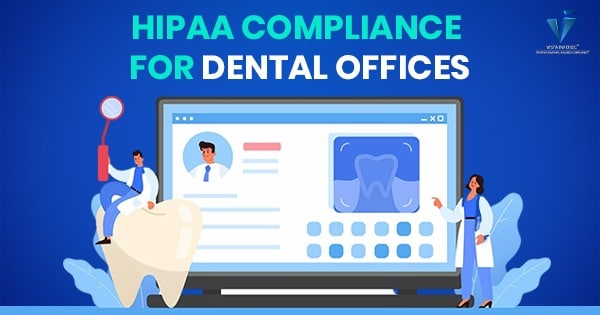
HIPAA Compliance for Dental Offices
Last Updated on February 26, 2026 by Narendra Sahoo When

Protecting patient health information isn’t just a regulatory checkbox — it’s a legal, ethical, and operational imperative. Our certified HIPAA compliance consultants help covered entities and business associates build programmes that genuinely protect PHI, not just pass paperwork reviews.
Our teams across the US, UK, Singapore, and India support clients through every timezone and regulatory context.
The Health Insurance Portability and Accountability Act — HIPAA — has been the cornerstone of healthcare data protection in the United States since 1996. But after two decades of enforcement evolution, OCR investigations, and multi-million dollar settlements, one thing is clear: the organisations that get it wrong aren’t the ones who lack intent — they’re the ones who treat HIPAA as a documentation exercise rather than a genuine security programme.
HIPAA applies to any covered entity — hospitals, physician practices, health plans, clearinghouses — and critically, to any business associate that creates, receives, maintains, or transmits Protected Health Information (PHI) on their behalf. That includes cloud hosting providers, EHR vendors, billing companies, legal firms, and a growing number of SaaS businesses whose platforms touch even a single healthcare workflow.
“The single most common finding in every HIPAA audit we conduct is the same: organisations have written policies they cannot demonstrate operating in practice. A HIPAA compliance audit by an experienced external consultant finds what internal reviews routinely miss.”
At VISTA InfoSec, our HIPAA compliance consultants have worked with healthcare systems, digital health startups, and global business associates across every timezone. We bring 20+ years of healthcare security experience — not generic IT auditors repurposed for compliance work — to every engagement.
A structured, phased approach that gives you clarity at every step — from initial discovery through sustained, audit-ready compliance.
Define the scope of PHI flows across your organisation. Map covered entity and business associate relationships, identify all systems that create, receive, store, or transmit PHI, and understand your specific regulatory context before any assessment begins.
Conduct a comprehensive HIPAA-required risk analysis across your administrative, physical, and technical safeguards. Evaluate current policies, access controls, workforce training, BAA coverage, and incident response procedures against all applicable HIPAA standards.
Implement risk-rated remediation across identified gaps. This includes policy and procedure development, technical control implementation, Business Associate Agreement review and execution, workforce training design, and breach notification process alignment.
Since 2003, OCR has investigated over 30,000 HIPAA complaints and resolved hundreds through corrective action plans and financial penalties.
If your organisation handles Protected Health Information in any capacity — directly or through a business arrangement — HIPAA compliance obligations apply. These are the organisations our consultants work with most frequently.
Large covered entities managing high PHI volumes across multiple departments, systems, and locations. Enterprise-scale HIPAA compliance requires coordinated programme management that spans clinical operations, IT, legal, and administration.
Smaller covered entities often lack dedicated compliance staff but face identical regulatory obligations. Our consultants provide right-sized HIPAA compliance consulting that delivers enterprise-grade protection without enterprise-grade overhead.
Your platform touches PHI, which makes you a business associate — regardless of whether you consider yourself a healthcare company. EHR integrations, telehealth platforms, patient engagement tools, and revenue cycle software all carry HIPAA obligations your enterprise customers will audit.
High-volume, high-sensitivity PHI environments with specific HIPAA requirements around minimum necessary access, record retention, and third-party disclosures. Pharmacies and labs regularly face OCR compliance reviews and require robust, defensible compliance documentation.
Health plans and payers handle some of the most sensitive categories of PHI at significant scale. HIPAA compliance programmes in this sector must address member rights, marketing restrictions, authorisation requirements, and complex data-sharing arrangements with providers and vendors.
HIPAA jurisdiction follows the data, not the headquarters. IT service providers, BPO firms, data analytics companies, and software developers outside the US that process PHI for American covered entities carry full business associate obligations — including breach notification and audit obligations.
Our HIPAA compliance consultants have spent careers in healthcare security, not generic IT audit repackaged with HIPAA labelling. We understand the clinical workflows, the EHR ecosystem, the vendor landscape, and the specific OCR enforcement patterns that make HIPAA compliance different from every other framework we work with.
Healthcare organisations frequently face overlapping compliance obligations — HIPAA alongside SOC 2, ISO 27001, HITRUST, or state-level privacy requirements. We understand where these frameworks share common controls, and we build integrated compliance programmes that satisfy multiple requirements without duplicating effort or budget.
With offices and delivery teams in the US, UK, Singapore, and India, we serve covered entities and business associates across every timezone. Our US-based consultants carry deep OCR enforcement experience. Our international teams understand the intersection of HIPAA with GDPR, PDPA, and other data protection regimes for globally distributed healthcare organisations.
Our audit team operates independently from our consulting practice. When we issue a HIPAA compliance audit report, it reflects an objective, evidence-based assessment — not one calibrated to justify additional consulting fees. That independence is what makes our findings credible to regulators, insurers, and business partners.
A gap report without a remediation path is not useful to a compliance team with real operational constraints. Our HIPAA consultants work alongside your IT, legal, and clinical operations teams to actually implement the controls we recommend — in your environment, within your timelines, and within your budget realities.
A HIPAA compliance audit is a starting point, not an ending point. Our retained advisory clients benefit from continuous programme support — updated risk analyses as systems change, annual training delivery, BAA lifecycle management, and expert guidance on every new OCR bulletin and enforcement development that affects their organisation.
Two distinct but inseparable obligations. Understanding the difference helps clarify what your organisation needs — and what an experienced HIPAA compliance consultant delivers for each.
Ongoing obligation — not a one-time certification
✔Conduct and maintain current HIPAA-required risk analysis across all PHI systems and workflows
✔Develop, implement, and enforce Privacy Rule and Security Rule policies and procedures
✔Execute and maintain current Business Associate Agreements with all applicable vendors and partners
✔Deliver annual workforce training on PHI handling and security awareness obligations
✔Implement physical, technical, and administrative safeguards proportionate to identified risk
✔Maintain documented breach detection, response, and notification procedures meeting 60-day OCR timelines
Best for: HIPAA compliance is the ongoing process of aligning your organisation’s PHI handling practices with the full requirements of the HIPAA Privacy, Security, and Breach Notification Rules. It is a continuous operational obligation — not a certificate earned once. Any organisation that creates, receives, maintains, or transmits PHI carries these obligations permanently, and must demonstrate active, documented compliance at any point OCR or a business partner requests evidence.
Independent examination of your compliance posture
✔Comprehensive gap analysis across Privacy Rule, Security Rule, and Breach Notification Rule requirements
✔Review of risk analysis documentation, risk management plans, and evidence of control implementation
✔Evaluation of Business Associate Agreements and vendor oversight processes for completeness and currency
✔Assessment of technical safeguard implementation — access controls, audit logs, encryption, integrity controls
✔Review of workforce training records, sanction policies, and privacy notice requirements
Best for: A HIPAA compliance audit is a structured, independent examination of your programme at a specific point in time. It produces formal, evidence-based findings that give your organisation an objective picture of where it stands — identifying what’s working, what’s missing, and what level of risk you’re carrying. Most organisations begin with a gap assessment, remediate identified deficiencies, and then commission a formal audit to validate their compliance posture before presenting it to regulators, business partners, or investors.
Speak with one of our HIPAA compliance consultants today. We’ll assess your current situation, explain your obligations clearly, and outline a practical path to compliance — no obligation, no sales pressure, no generic proposals.
The questions we hear most often from organisations starting — or restarting — their HIPAA compliance journey.
HIPAA compliance refers to meeting the requirements of the Health Insurance Portability and Accountability Act, which encompasses three primary rules: the Privacy Rule, the Security Rule, and the Breach Notification Rule. It applies to covered entities — health plans, healthcare clearinghouses, and most healthcare providers — as well as to business associates, meaning any vendor, contractor, or service provider that creates, receives, maintains, or transmits Protected Health Information (PHI) on behalf of a covered entity. The obligation extends to subcontractors of business associates as well. If your organisation touches PHI in any operational capacity, HIPAA compliance requirements apply to you.
The HIPAA Security Rule requires organisations to conduct a risk analysis at reasonable and appropriate intervals — and OCR guidance makes clear this means at minimum annually, and also when significant operational, technological, or environmental changes occur. In practice, we recommend a formal HIPAA compliance audit at least once annually, with an updated risk assessment whenever you deploy new technology that handles PHI, on-board a significant new business associate, experience a workforce or organisational change, or when new enforcement trends suggest your programme may have gaps. Organisations that have not conducted a formal audit in the last 12-18 months should treat that as an urgent priority.
A HIPAA gap assessment is typically an internal or consultant-led review that compares your current programme against HIPAA requirements and identifies deficiencies — it is primarily a diagnostic tool that informs a remediation roadmap. A formal HIPAA compliance audit is a more rigorous, independent evaluation that reviews and tests evidence, validates control operation, and produces a findings report that can be presented to stakeholders, regulators, or business partners as a credible attestation of your compliance posture. Most organisations begin with a gap assessment, remediate the findings, and then commission a formal audit to validate the programme before external scrutiny. Our HIPAA compliance consulting team can guide you through both stages and advise on the right sequencing for your situation.
Yes — HIPAA jurisdiction is determined by the nature of the data relationship, not by geographic location. If your organisation is a business associate of a US-covered entity — meaning you create, receive, maintain, or transmit PHI on their behalf — you carry full HIPAA business associate obligations regardless of where your company is headquartered. This is a common situation for IT service providers, software vendors, BPO firms, and data analytics companies in India, Singapore, the Philippines, and elsewhere that provide services to American healthcare clients. A HIPAA compliance audit by our team can clarify your specific obligations and help you demonstrate compliance to your US healthcare customers — a requirement that is now routinely included in enterprise procurement processes.
After conducting HIPAA compliance audits across hundreds of organisations over two decades, the same findings appear repeatedly. The most common deficiencies are: an incomplete or outdated risk analysis that does not meet OCR's required depth and documentation standards; Business Associate Agreements that are missing entirely or that lack the mandatory provisions required under the HITECH Act amendments; insufficient technical safeguards — particularly inadequate audit logging, missing encryption on portable devices, and weak access control configurations; workforce training that is annual in name only, with no documentation of what was covered or who attended; and breach notification procedures that have never been tested and would fail at the first real incident. None of these are complicated to fix with the right guidance — but they require someone who knows where to look.
The timeline for a HIPAA compliance audit depends on the size and complexity of your organisation, the scope of PHI-handling systems and workflows, the maturity of your existing compliance programme, and how promptly documentation and key personnel are available during the engagement. For a mid-sized healthcare organisation or business associate with a defined scope, a HIPAA compliance audit typically takes four to eight weeks from kickoff to final report delivery. A full HIPAA compliance consulting engagement — including gap assessment, remediation support, and formal audit — typically runs three to six months. We offer accelerated options for organisations facing business deadlines, investor due diligence, or OCR inquiry timelines.
A Business Associate Agreement (BAA) is a written contract required by HIPAA between a covered entity and any business associate that will create, receive, maintain, or transmit PHI on its behalf. The BAA establishes the permissible uses of PHI, the business associate's safeguard obligations, their breach notification responsibilities to the covered entity, and the requirements for returning or destroying PHI at contract termination. A missing, incomplete, or outdated BAA is one of the most frequently cited deficiencies in OCR investigations — and it can expose both parties to shared liability in the event of a breach. Our HIPAA compliance consultants conduct a full BA inventory and BAA gap review as a standard component of every engagement.
Last Updated on February 26, 2026 by Narendra Sahoo When

Last Updated on July 18, 2025 by Narendra Sahoo Nearly
We are excited to invite you to our upcoming webinar, “HIPAA Risk Assessment: Turn Threats into Opportunities for Stronger Compliance”,
The webinar will be a live and interactive session, open for queries to clear doubts or gain knowledge concerning both
VISTA InfoSec LLC,347 Fifth Ave,
Suite 1402-526, New York, NY 10016
© Copyright 2026. VISTA InfoSec. All Rights Reserved. | Disclosure Policy | Privacy Policy | Sitemap
Enquire Now
WhatsApp us